
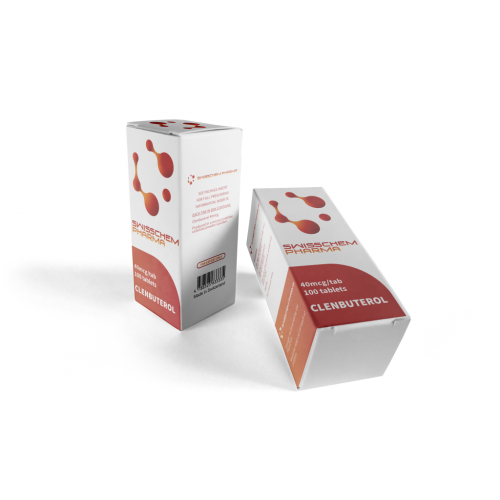
Clenbuterol 40mcg 100tab Swisschempharma
Trade Names: Clen, Ventipulmin
Chemical Names: Clenbuterol Hydrochloride
Routes: Oral
Clenbuterol is a sympathomimetic amine that is used as a decongestant and bronchodilator for respiratory disorders. Clenbuterol is a ß2 (Beta-2) agonist with stimulating and thermogenic effects. It causes an increase in aerobic capacity, stimulates the central nervous system, and raises blood pressure and oxygen transport. It increases the rate at which body fat is metabolized while simultaneously raising the body's basal metabolic rate (BMR). In animal studies, Clenbuterol has demonstrated anabolic activity, but this remains unproven in humans and is still undecided. The ability of Clenbuterol to stimulate fat cells and accelerate the breakdown of triglycerides into free fatty acids is what makes it attractive to bodybuilders and people seeking fat loss. Clenbuterol is a drug that, when misused, can cause life-threatening side effects, so great care should be taken when using this medication.
The dosage for the first few days should be very low, and most people find 30-40 mcg to be a suitable starting dose. If side effects are tolerable, the dosage can be increased by 10-20 mcg every three or four days. Dosage increases should stop if side effects become too much to tolerate or if a maximum of 120 mcg per day is reached. Never exceed 120 mcg per day! (80 mcg for women). Clenbuterol only works for a limited time before its effects diminish for most individuals; this is typically about 4 to 6 weeks due to downregulation of ß2 receptors. Since Clenbuterol has thermogenic effects, it is possible to determine whether it is still effective by monitoring body temperature. An increase in temperature of about 0.5 to 1°C is a sign that Clenbuterol is still active. However, this comparison should only be made under controlled and similar conditions—for example, early in the morning upon waking. Taking a reference temperature before starting Clenbuterol also helps in drawing an accurate conclusion. In the past, Clenbuterol was cycled in and out, about every 2 weeks, to minimize receptor downregulation. This is no longer necessary, as drugs like Ketotifen can now be taken in conjunction with Clenbuterol. Ketotifen is an antihistamine used in the treatment of asthma in children. Ketotifen also upregulates ß2 receptors, making Clenbuterol more effective and for longer periods. To achieve this upregulatory effect, it should be used at 3 mg per day. When taking Clenbuterol, a number of side effects are likely and may include shaky hands, insomnia, sweating, increased blood pressure, and nausea. These side effects generally subside after about a week as the user becomes accustomed to the drug.
Clenbuterol hydrochloride is a central nervous system stimulant with the potential for fatal overdose. Signs of overdose can include rapid breathing, irregular heartbeat, unconsciousness, tremors, shaking, panic, extreme restlessness, and severe nausea, vomiting, or diarrhea. Several bodybuilder deaths in recent weeks have been linked to Clenbuterol use, leading to "sudden death syndrome." In these cases, most were associated with doses well above 120 mcg per day or dosages that were increased too quickly. Clenbuterol is readily available in South Africa, though the price varies depending on the brand and administration route. Injectable versions are generally more expensive, while oral versions are cheaper. Oral forms can be found as powders (Ventipulmin), tablets, or capsules.
