
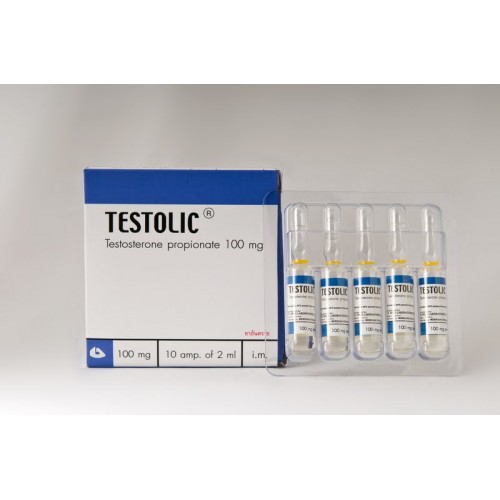
TESTOLIC
Testosterone propionate works much faster than other testosterone esters such
as cypionate and enanthate. This results in a much more frequent dosing
schedule. Normally, propionate is injected at least every other day, and some
athletes even prefer daily injections. Propionate is convenient during
pre-contest cycles because, thanks to its fast clearance times, it can be used
up to 2 weeks before a show. Doping users claim that compared with the
longer-acting testosterone esters, it has a very fast onset of effects that appear
within two days, with a significantly stronger pump effect, increased training
energy, strength, and appetite. In addition, it does not cause significant
water retention in the body. The side effects of testosterone propionate abuse
are reportedly less severe and less common than those of depot testosterone
forms, but there is a risk of severe acne, hair loss, body-hair growth, and
deepening of the voice with prolonged use or misuse of higher doses. The risk
of gynecomastia is said to be minimal, despite the mild aromatization of the
compound, and its toxic effect on the liver is also considered low.
A dosage in the range of 25–100
mg every other day is mentioned.
What role does testosterone
play?
It is involved in sperm
production, increases libido in both men and women, plays a role in the
development of the penis/testicles, and influences secondary male sexual
characteristics such as facial and body hair growth and deepening of the voice.
For bodybuilders, however, its main role is to contribute to muscle-building
properties in which androgens promote protein synthesis.
Low testosterone levels can cause a number of unpleasant effects
on the body, such as heart problems, erectile dysfunction (ED), low energy
levels, depression/anxiety, anemia, infertility, polyuria, dry skin, poor
sleep, increased abdominal fat, high cholesterol, and gynecomastia, to name a
few. As you can see, testosterone is a very powerful hormone linked to many
different attributes. Testosterone is
produced in the testes in men, and in women it is produced in the ovaries; men
naturally have about ten times more testosterone than women. If you suspect
that you suffer from low testosterone levels, it is advisable to seek medical
help and possibly be placed on TRT (testosterone replacement therapy).